
MRI Scan in JP Nagar, Bengaluru
Book AppointmentAbout MRI Scan
Magnetic Resonance Imaging, commonly known as MRI, is an advanced diagnostic imaging technique used to create highly detailed images of structures inside the body. It is particularly useful for examining the brain, spine, joints, muscles, soft tissues and selected abdominal and pelvic organs.
MRI uses a powerful magnetic field and radiofrequency energy rather than ionising radiation. The detailed images obtained through MRI can help doctors investigate symptoms, identify abnormalities, assess injuries and plan appropriate treatment.
Overview
What is an MRI Scan?
An MRI scan creates detailed cross-sectional and multi-dimensional images of the body. Unlike conventional X-rays, which are particularly useful for bones and certain chest conditions, MRI provides excellent contrast between many different types of soft tissue.
Depending on the clinical requirement, MRI may be performed for the brain, spine, knee, shoulder, abdomen, pelvis, joints or other areas of the body.
Some examinations may require a contrast agent to improve visualisation of particular tissues or abnormalities.
Why is an MRI Scan Recommended?
A doctor may recommend an MRI when more detailed imaging is required to investigate:
- Persistent headaches or neurological symptoms
- Back or neck pain
- Suspected disc problems
- Joint injuries
- Ligament or tendon injuries
- Unexplained weakness or numbness
- Suspected tumours or abnormal growths
- Soft-tissue abnormalities
- Selected abdominal or pelvic conditions
- Follow-up of known conditions
What Conditions Can MRI Help Evaluate?
Depending on the body part being examined, MRI can help evaluate:
- Brain and neurological abnormalities
- Spine and disc disorders
- Joint and musculoskeletal injuries
- Soft-tissue abnormalities
- Tumours and lesions
- Certain vascular abnormalities
- Selected abdominal and pelvic conditions
MRI findings are interpreted along with symptoms, examination findings and other investigations where necessary.
How is an MRI Scan Performed?
Before the scan, the diagnostic team will ask relevant safety questions, particularly regarding metal implants, pacemakers, previous surgeries and other medical devices.
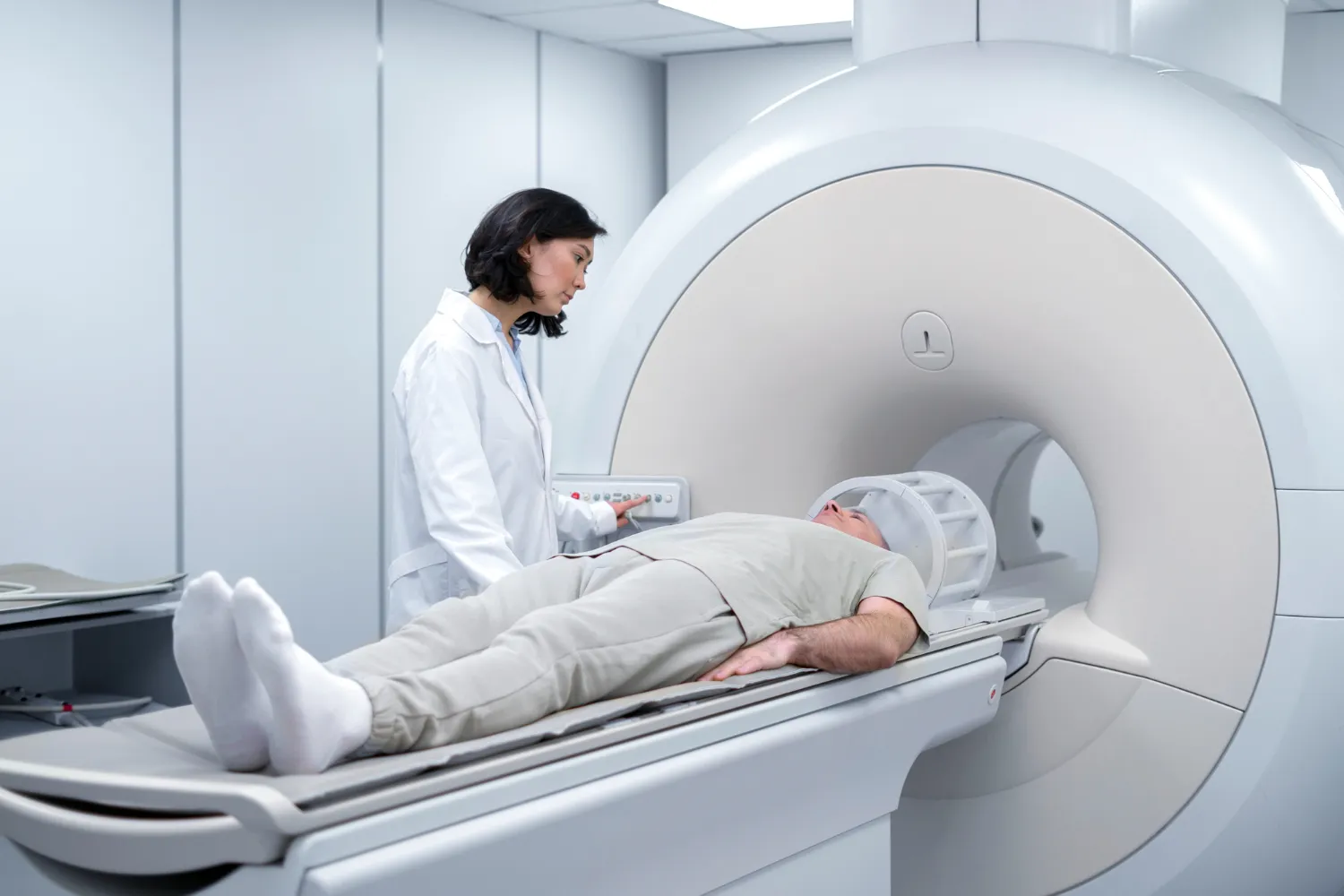
The patient lies on a movable examination table. The table then moves into the MRI scanner.
The scanner produces a series of images from different sequences. You will need to remain as still as possible during the examination because movement can affect image quality.
The MRI machine can produce loud knocking or buzzing sounds during imaging. Depending on the examination, protective headphones or ear protection may be provided.
Preparation Before an MRI
Preparation depends on the type of MRI being performed.
Patients should inform the diagnostic team about:
- Pacemakers or implanted devices
- Metal implants
- Previous surgeries
- Pregnancy or possible pregnancy
- Kidney problems
- Allergies or previous reactions to contrast agents
- Any other relevant medical conditions
If contrast is planned, additional instructions may be provided.
Why Choose TruScan Diagnostics?
Choosing a diagnostic centre is about more than simply having access to a test. Patients need reliable processes, appropriate technology, professional interpretation and a comfortable diagnostic experience.
At TruScan Diagnostics, we bring multiple diagnostic disciplines together to make healthcare investigations more convenient.
Comprehensive Diagnostic Services
From routine laboratory investigations to MRI, CT, ultrasound, cardiac testing and specialised diagnostics, TruScan offers a broad diagnostic portfolio.
Advanced Diagnostic Technology
Our diagnostic portfolio includes advanced imaging and laboratory technologies designed to support modern diagnostic requirements.
Integrated Diagnostic Experience
Patients may require more than one investigation. Having imaging, laboratory and specialised services within one diagnostic network can make the diagnostic journey more convenient.
Patient-Focused Approach
We aim to provide a clear, comfortable and organised experience from registration and sample collection through testing and reporting.
Convenient JP Nagar Locations
TruScan currently lists centres in JP Nagar 2nd Phase and JP Nagar 7th Phase, Bengaluru. The JP Nagar 7th Phase centre is listed as open 24 hours.
Accessible Diagnostic Support
Patients can contact the TruScan team for information about test availability, preparation requirements, appointment scheduling and other diagnostic queries.
Benefits & Value
Clinical value
- Excellent soft-tissue imaging
- Useful for brain, spine and musculoskeletal evaluation
Patient safety
- No ionising radiation
- Non-invasive imaging procedure
Detailed imaging
- Detailed images from multiple planes
- Supports diagnosis and treatment planning
Limitations and Considerations
MRI is not suitable for every patient or every clinical situation. Certain implants and metallic devices may affect MRI safety. Image quality may also be affected by patient movement.
MRI is also not always the first-choice investigation. The appropriate scan depends on the patient's symptoms and the doctor's clinical assessment.
Frequently Asked Questions
Is an MRI painful? +
Does MRI use radiation? +
How long does an MRI take? +
Can I undergo MRI if I have an implant? +
Can I eat before an MRI? +
Looking for a Diagnostic Test in JP Nagar?
Whether you need an MRI, CT scan, ultrasound, X-ray, cardiac investigation, neurological test, laboratory investigation or preventive health checkup, TruScan Diagnostics can help you access the appropriate diagnostic service.
Locations: JP Nagar 2nd Phase & JP Nagar 7th Phase, Bengaluru
JP Nagar 7th Phase: Manvi Arcade, WGHCS Layout, behind Ever Fine Supermarket, Bengaluru.
Before Your Visit
Please confirm:
- The exact test recommended by your doctor
- Whether fasting is required
- Whether any medication instructions apply
- Whether previous reports should be brought
- Whether an appointment is required
- Current pricing and test availability
- Expected reporting time
Medical investigations should be selected and interpreted in consultation with an appropriately qualified healthcare professional.