
Missed or Irregular Periods: What a Pelvic Ultrasound Can Show

Missed or irregular periods are common, but persistent irregularity is worth investigating rather than ignoring. A pelvic ultrasound is one of the most useful first tests for this, since it lets a doctor directly examine the uterus, ovaries, and endometrial lining to check for cysts, fibroids, PCOS-related changes, or thickening that could explain the irregularity. It's painless, doesn't use radiation, and often gives enough information to guide the next step.
Why Do Periods Become Irregular or Go Missing?
A menstrual cycle depends on a precise hormonal sequence between the brain and the ovaries. When that sequence is disrupted, periods can become early, late, unusually light or heavy, or stop altogether. Common causes include Polycystic Ovary Syndrome (PCOS), thyroid disorders, high stress, sudden weight changes, perimenopause, uterine fibroids or polyps, and pregnancy. Because so many different conditions can look similar from the outside, imaging is often needed to narrow down the actual cause rather than guessing from symptoms alone.
What Is a Pelvic Ultrasound?
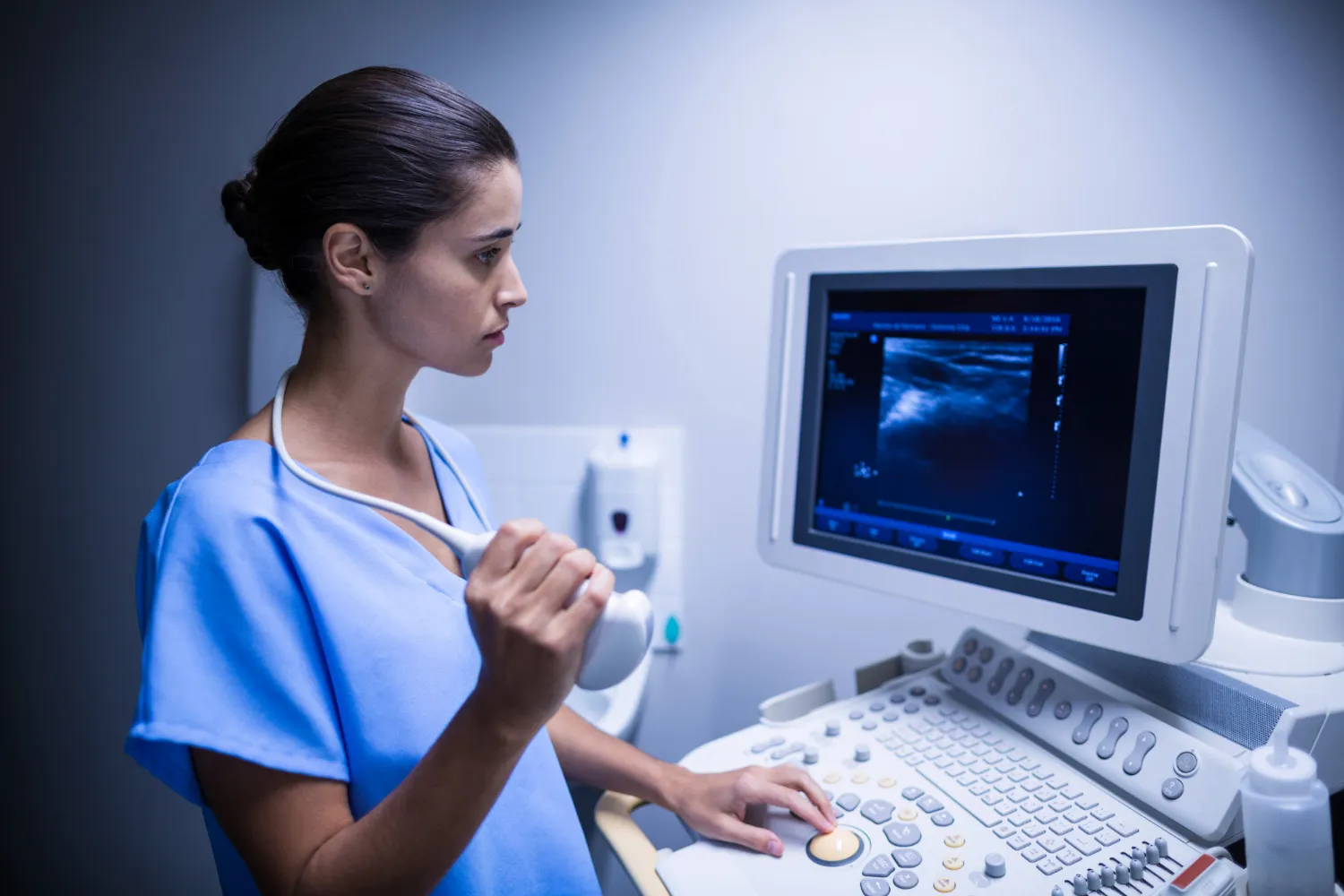
A pelvic ultrasound uses sound waves to create real-time images of the uterus, ovaries, and surrounding pelvic structures. It can be performed as a transabdominal scan (over the lower abdomen) or a transvaginal scan (which gives a closer, more detailed view), depending on what your doctor needs to assess. Neither method involves radiation, and both are considered safe and well-tolerated.
What Can a Pelvic Ultrasound Show?
A pelvic ultrasound can identify ovarian cysts, including the small multiple cysts associated with PCOS. It can measure the thickness of the endometrial lining, which helps assess whether irregular bleeding is linked to hormonal imbalance. It can detect uterine fibroids or polyps that may be causing heavy or irregular bleeding. It can also help confirm or rule out early pregnancy as a cause of a missed period, and in some cases identify structural differences in the uterus that affect cycle regularity.
When Should You Get a Pelvic Ultrasound for Irregular Periods?
- Your periods have been irregular for three or more consecutive cycles
- You've missed a period and pregnancy has been ruled out
- You're experiencing unusually heavy or prolonged bleeding
- You have pelvic pain along with cycle changes
- Your doctor suspects PCOS, fibroids, or another structural cause based on your symptoms
Who Should Consider This Test?
Women trying to understand persistent cycle irregularity, those being evaluated for PCOS or fertility concerns, women with unexplained pelvic pain or bloating, and those approaching perimenopause with new bleeding changes are all common candidates. Your doctor will confirm whether it's the right next step for your specific symptoms.
How to Prepare for a Pelvic Ultrasound
For a transabdominal scan, you'll usually be asked to arrive with a full bladder, since this helps create a clearer image of the pelvic organs. For a transvaginal scan, a full bladder isn't required, and the process is quick and generally more detailed. Your doctor or the diagnostic centre will confirm exact preparation instructions when you book.
What Happens During the Procedure
You'll lie down on the exam table, and ultrasound gel is applied to the lower abdomen for a transabdominal scan, or a thin, covered probe is gently used for a transvaginal scan. The technician moves the probe to capture images of the uterus and ovaries from different angles. The scan is quick, generally painless, and you can resume normal activity immediately afterward.
Understanding Your Results
Your report may mention findings such as ovarian follicles, cyst size, endometrial thickness, or the presence of fibroids. Not every finding is abnormal — some, like small functional cysts, are common and resolve on their own. Your doctor will interpret the ultrasound findings together with your symptoms, cycle history, and any blood tests to reach a diagnosis, so avoid trying to self-diagnose from the report alone.
Irregular or missed periods can have several underlying causes, and a pelvic ultrasound is often the clearest first step toward understanding what's happening. It's quick, painless, and gives your doctor direct visual information about your uterus and ovaries that symptoms alone can't provide. If your cycle has been consistently irregular, don't wait it out — get it evaluated.
Related Reading: How to Choose the Best Ultrasound Service in Your Area
Book Your Pelvic Ultrasound
TruScan Diagnostics offers pelvic ultrasound imaging at our JP Nagar centres, open 24 hours. View our Ultrasound services or call +91 8956 600 600 to book.
Medical Disclaimer: This article is intended for educational purposes only and should not replace professional medical advice, diagnosis, or treatment. Always consult your treating physician regarding your symptoms, imaging results, or healthcare decisions.
TruScan Diagnostics, JP Nagar, Bengaluru
- JP Nagar 7th Phase: Manvi Arcade, WGHCS Layout, behind Ever Fine Supermarket, JP Nagar 7th Phase, Bengaluru 560078
- JP Nagar 2nd Phase: 213, 9th Cross Rd, KSRTC Layout, JP Nagar 2nd Phase, Bengaluru 560078
- Phone: +91 8956 600 600 (WhatsApp available)
- Website: truscan.in
- Instagram: @truscandiagnosticsofficial
- Facebook: facebook.com/truscandiagno
- Open 24 Hours
Frequently Asked Questions
Everything you need to know about our service
Can a pelvic ultrasound tell you why your period is late?
It can help. It can rule out or confirm pregnancy and identify ovarian or uterine causes like cysts or fibroids, though hormonal causes like thyroid issues may also need a blood test.
Is a pelvic ultrasound painful?
No. It's a well-tolerated, non-invasive procedure. A transvaginal scan may feel slightly unusual but is not typically painful.
Can pelvic ultrasound detect PCOS?
Yes. It's one of the main tools used to identify the characteristic pattern of small ovarian cysts associated with PCOS, alongside symptoms and blood tests.
Do I need a full bladder for a pelvic ultrasound?
Only for a transabdominal scan. A transvaginal scan doesn't require this.
How soon can I get a pelvic ultrasound after a missed period?
You can usually get scanned as soon as you notice irregularity, though your doctor may advise timing it around a specific point in your cycle depending on what's being evaluated.
Is a pelvic ultrasound safe?
Yes. It uses sound waves, not radiation, and is considered safe for regular use, including during pregnancy.
Where can I get a pelvic ultrasound in JP Nagar?
TruScan Diagnostics offers pelvic ultrasound imaging at both its JP Nagar centres, open 24 hours. Learn more on our Ultrasound page.